Okay, a good few things to write here. A good few things have happened since the last update.
We'll go chronologically. The first thing that happened was a huge meeting of all the rotary exchange students in Belgium. They all met at Brussels for a tour of the Royal Palace, the permanent adress of the King, currently Albert II, and the Senate, which acutally houses both the Senate and the House of Representatives. The tours were nice, and it was good to see the buildings, which are pretty. Also, just Brussels itself is pretty. I really hope I'll be ab le to get some pictures of the city itself, but I temporarily lost track of my camera, so I wasn't able to this time. Oh well. Don't worry, I have it securely in my possesion and it'll stay that way. There was a lot of speaking, and it was all the same message: "Welcome, good to have you, it'll be a blast and you'll learn lots. We'll probably learn from you, too." It's a good message, I guess, but it's like graduation speeches: They all tend to be the same and you get bored of them after a while. The speeches really weren't so bad, though. The real problem was that a lot of nothing was scheduled. There were some long stretches of time where it seemed that the schedulers deliberately had no activity planned, so everybody was just standing around. This suits most people just fine, but I don't do well in that type of situation. More on this later. By and large, Brussels was good. I didn't like the nothing, though. And people kept taking pictures. I don't like being in pictures.
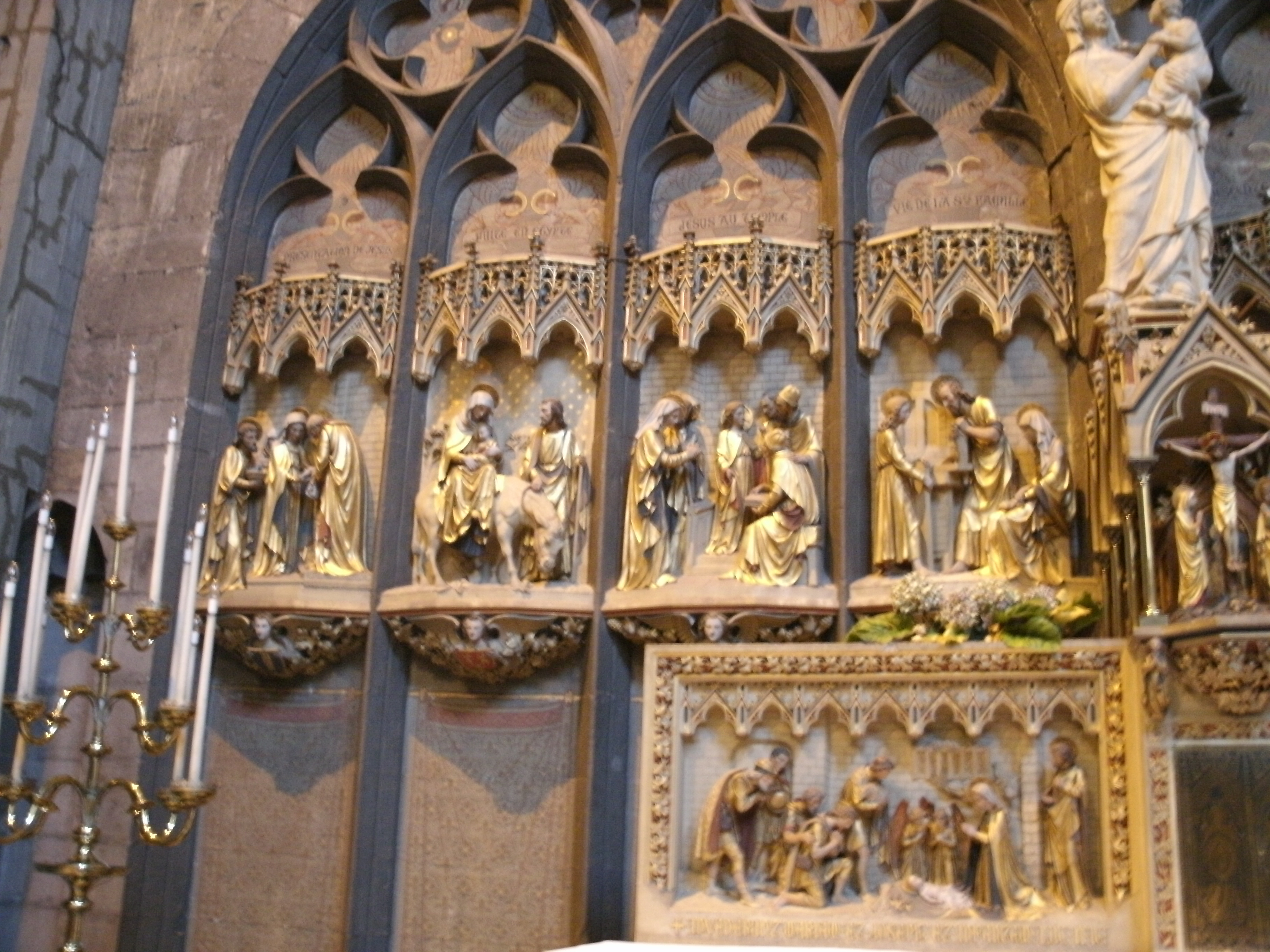
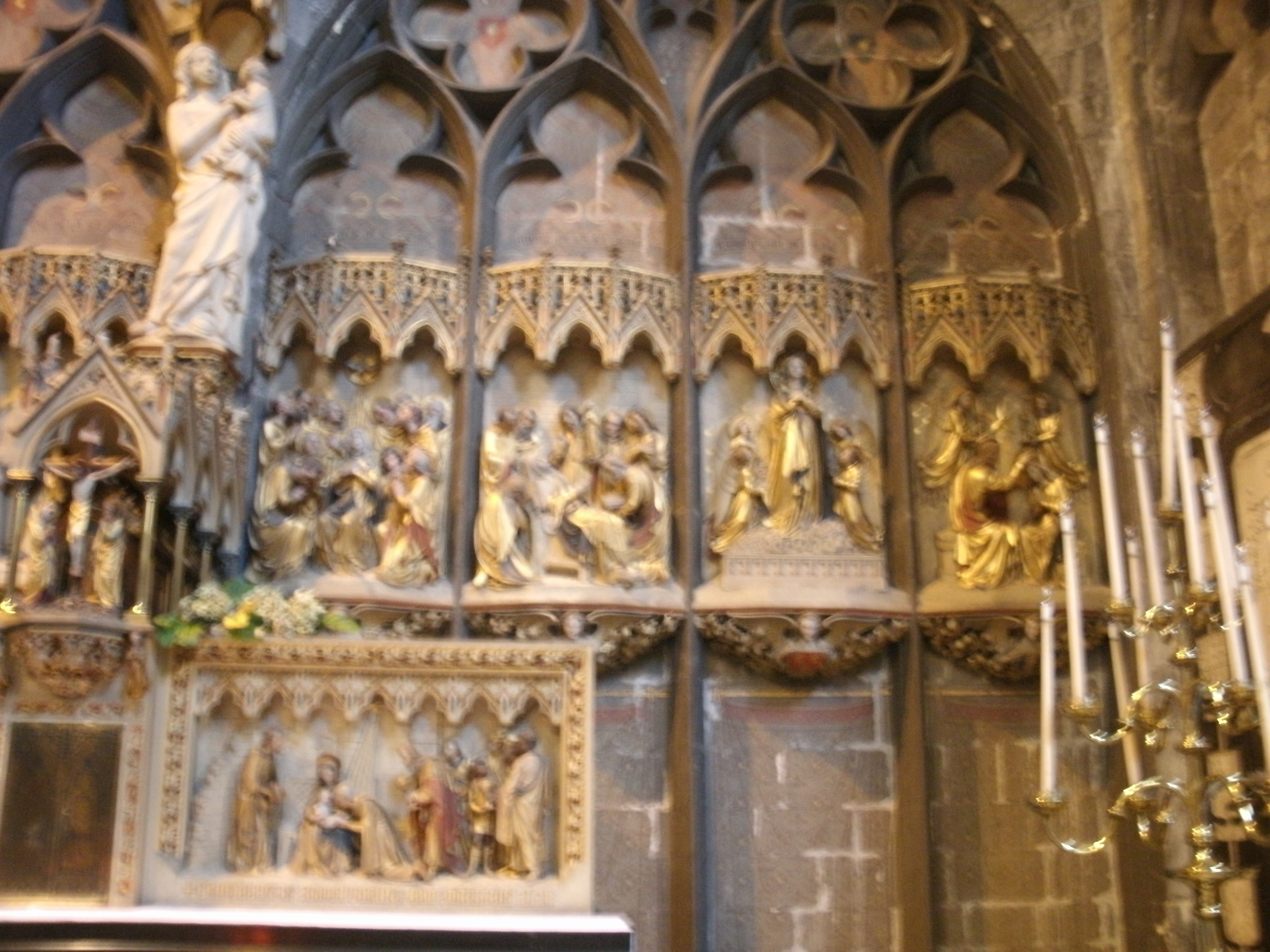
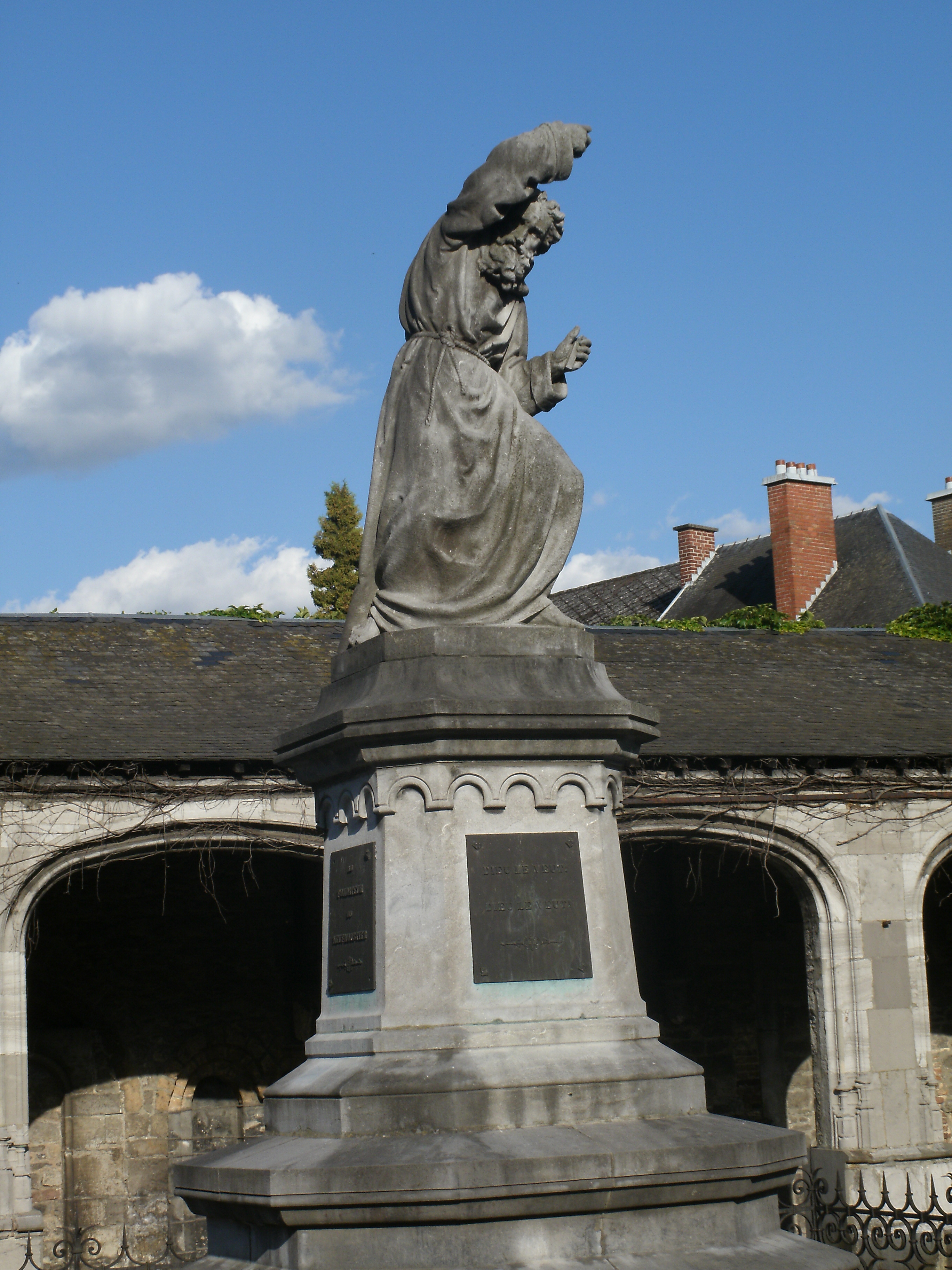
The next big even that happened was the reunion of all the students in my District, of which there are three in Belgium. The meeting was here in Huy, where I'm staying, so the commute was mercifully short. There was obviously Intentional Nothing scheduled here. There were like two hours with nothing to do. It sucked. I had nothing to do. I do have to say, though, I made a friend that way: his name is Robert, and he comes from New York. A main thing that we have in common is a dislike of large gatherings, especially when there's nothing to do. You start throwing a ball around, I'm there (and that actually happened), but if there's nothing to do, I can't cope, and I've gotta go find something to do. I just explored the building we were in, which was some sort of dormitory. It served to pass the time. The main problem, though, was the main event. We were all there so that the Rotary could relate to us important rules, expectations, and advice. Theoretically, this is not a problem. The problem is that I've heard it all three or four times already, and I was bored off my gourd having to sit for hours listening to it again. By and large, I consider this meeting a failure, for me, at least. There were sixty-four exchange students present at this conference, and I'm sure the information related there was of vital importance for some of the people there. With a group that large, it's impossible to know who's heard what and who hasn't. It was necessary that the Rotary do this to cover all bases and to make sure everybody knows what's up. I know that. But I don't like it any better. Likewise, people keep talking about the importance of learning French, but all the Belgians kept talking to me in English. This is because they cannot know that I am already pretty capable in French. I actually can speak French; this is atypical, at least this early in the exchange. I'm constantly annoyed when these people who keep harping on the importance of French talk to me in English; it feels like a mild insult to me. But it's not their fault, and so I cannot fault them for it. It's just annoying. Nevertheless, there was an extremely pleasant stroll around Huy, during which we visited the Colligiate (which means Huge Church not Quite big Enough to be a Cathedral) where there were some comics in relief. We also saw this awesome statue of a pilgrim who's obviously saying "Rock On!" You can see the fistpump, and it's no far stretch of the imagination to notice that his empty hand was probably at one time clutching a bottle of Jupiler (the Belgian equivalent to Budweiser). If it weren't so obvious, I wouldn't make such a big deal of it, but I just cracked up when I saw this statue. I still think it's pretty funny.
Now let me tell you Americans about something that you don't know you're taking for granted until they're gone: street signs. I'm used to having street signs at every corner of every intersection. Most Americans are. When they approach an intersection, they expect to be able to look up and find out where they are. Things are not so simple here. The thing is, in Europe, "Urban Planning" can be somethign of an oxymoron, because these cities have been here for like a thousand years and the peasants (ignorant as they were) would build will-nilly wherever they pleased. This is not condusive to either intersections or street signs. There are some street plaques, mounted on the side of a building, typically near intersections or roundabouts, which are very numerous (I'm told they're something of a fad right now in these parts). Still, when a person is lost on a bicycle in a stange town, as I was, it does not help very much to come to an intersection and be unnable locate yourself. I looked at a map of the city mounted in a bus stop to orient myself, and it was hard. There was no "you are here" star or anything of the like, so I had to locate the nearest street plaque and go from that. I thought I identified a route to get me back home, rode a block, and saw another street plaque that gave me a much better idea of where I was, so I went back to the map and figured out something better. Then a nice old Monsieur came along and helped me find a better route through some backstreet that I never would have seen were it not for him. Lemme tell you, these streets are shaped all wierd, and sometimes their name changes right in the middle for little to no apparent reason. To a person like me, who' s used to the state being divided neatly into a grid by miles, this seems extremely inconvenient and unnecesarily backwards. I guess if you grow up here, it makes less of a difference. Maybe people just kind of "know" where all the streets are and what they're called.
But back to one thing: most people thrive when there's scheduled nothing, because they get tofgether with other people and chat stupid small talk. I can deal with this with about maximum eight people, and I guess even then it depends on the people. Noticing this made me realize: I'm constantly being told that I need ot integrate myself into the Belgian culture. I need to be able to assimilate myself into my environs. It occurs to me that this has never been a strength of mine, and seeing as I never really integreated myself into American culture, I wonder how I'll fare here. I think I might just have to carve my own niche out, like I did back home in the States. Seriously, I never assimilated into American culture. Instead, I said "no" to peer pressure and forged my own culture, borrowing copiously from Japan as well as the American Nerd culture. I acheived soemthing that was fairly stable back home, and we'll see if we can reproduce that feat here in Belgium.
By the way, I've been reading copious amounts of Tintin recently. And let me tell you: Tintin is boring. All the cahracters are flat, except for maybe the captain Haddock. Dupont and Dupond (Thomson and Thompson in the English version) and the two stooges, they're jsut gag characters; Tournesol (Calculus) is the absent-minded professor, another gag character and a convineint plot device whenever the cahracters need some science done; The eponymous character is nothing but a vehicle for the adventures Herge decides to throw his way. The characters with the most personality are minor ones like Milou (Snowy), Tintin's dog, or Abdallah, the Arabian child-prince that tintin rescues. That said, I like Haddok; he's this old, quite frankly pissed-off sea captain that jsut kind of wishes that people would leave him alone. Still, he feels fiercely loyal to his freinds, and will do anything to help protect them, and he can't leave Tintin go off by himself because he'd worry about him too much. He's a guy with a bit of personality. Few others, though.
For those of you who might not know, Tintin is a comic by the Belgian comics artist Herge, which is a pen name for something else that is not important. The eponymous character is a globe-trotting "reporter," who regularly takes time off of reporting to play Sherlock Holmes and always ends up making the news instead of reporting it. It's one of the most famous European comics and is really kind of a symbol of European comics. Whene the artist announced he was sending Tintin to China, he was contacted by a Chinaman who said, in effect, "Hey, man, be careful about how you portray China. If you just role out the stereotypes when talking about Chinese people and the country they inhabit, it will cause much harm." The Chinaman probably felt the need to send this letter because of "Tintin in the Congo," one of the earliest Tintin albums, which Herge said was a treatise of the benefits of colonialism (remember Leopold II? The Congo was actually a Belgian colony at the time) that he later admitted was a mistake. Herge invited this man to his house and became fast freinds with him. The comic had such enlightened scenes as the one where Tintin killed a rhinocerous while big game hunting by drilling a hole in it and inserting a stick of dynamite therin. I haven't read this one myself, and a good few questianoble scenes, including the rhinocerous one, were redrawn for later editions. By all accounts, it was pretty bad. So the turning point for the Tintin series was "The Blue Lotus," where Tintin goes to China. Herge actively demonizes white surpremacy and ethnocentrism (he has some pretty nasty antagonists be ethnocentric white surpremecits) and goes so far as to include a scene where Tintin and a Chines boy he pulls out of a river sit down and reconcile their stereotyped images on each other's countries, an active appeal to quit raggin on the Chinaman. There's also a scene where the Dupondt, ever the resident stooges, disguise themselves with stereotyped Chinese outfits instead of real ones, which makes them look ridiculous and stick out like sore thumbs. It's fairly progressive in that manner. What's more interesting still is how Herge treats the Japonese. He rails on the Japonese; they're the main vilains of the series, blowing up a railroad, blaming it on Chinese bandits, and then invading China to "restore order." There are also Japonese Opium traffickers. The Japonese are all buck-toothed, too, like in a WWII Marvel comic book. It's pretty nasty. But, seeing as Herge got his informaiton from a Chinaman, this is not surprising; China and Japan have had a "mercurial" relationship at best. I guess this is a reminder that Japan wasn't always the tourist attraction it is now; it used to be a pretty nasty place. Japan did actually invade China, and it was pretty nasty (See also: Rape of Nanking), as well as Korea and most of the islands to the south. Japan used to be a brutal colonialist power beforw the Atomic Bomb killed it. Speaking of, "The Blue Lotus" has a copyright of 1946, so I imagine that was kind of rubbing Japan's nose in it. The important thing to note is how Herge is at once progressive and regressive, appealing to ethno-acceptism and stereotyping at the same time. It's also worth noting that throught Tintin's long history, Herge never discarded the charicature of black people. You know the one, with the huge, red, lips. He used that one until his dying day. He does have sympathetic Black characters, but they're all drawn very stereotypically. Go figure.
Thank you. I hope I didn't waste any more of your time than you deserve, or thought pleasurable.
Friday 13 comes on a sunday this month.
So. I've had a week of school. The Belgian school system is organized a bit differently. All the students are organized into "Classes;" each "Class" has its own schedule, so the whole group of students moves from classroom to classroom with some individual variations. For core classes like Math or French, all the Class is there, but for classes with differeing schedules, like Physics of English, only part of the Class will be there, and maybe even a combination of different Classes, but I think that only happens once in my schedule, in Latin class. Latin class isn't working, by the way, because I'm in essentailly the most advanced Latin class with almost no background in Latin (Mrs. Lash does not count. I don't think I knew Latin even when I was taking it with her). I hear that after a month, I'll have the oppourtunity to request changes in my schedule, so maybe I can request to be in a lower-level Latin class. It's obvious that I have no place there. In the other classes, however, I'm doing just fine. History and French are a bit difficult right now because I don't know any European History and the Language is still an issue. French class is in the early Renaissance right now, studying "Humanism," which is a term whose meaning I'm only vaguely aware of. This means that the French is kind of archaic; it's contemporary with Shakespeare. Everything is in "moderniszed spelling," rather like Shakespeare, I suppose, which just goes to show how old it is. Spellings change slowly (See also: "knight"). The History teacher talks really fast, too, so it's harder to tell what he's saying than what most other people are saying. The second difference from the American school system that I'm used to is that I don't have the same classes every day. This is really weird. I'm used to having the same seven different classes every single day. In Belgium, your class schedule is different every single day. I don't like this. I liked being able to memorize a schedule and plod to my next class without thinking. I can't really do this now. It does, however, allow for a greater breadth of courses; I'm taking like ten, maybe eleven different courses right now. However, I get the feeling that I won't learn as much in a subject in Belgium than I would in the US because some classes meet for only one fifty-minute period a week. In fact, the difficulty of a class is measured in the number of hours you spend on it a week. So, I'm in "Physics 1," which means that I spend one hour a week in Physics class. "Physics 3" is the upper-level physics class, which meets for three hours every week. I don't think a single one of these classes goes for five hours a week like every single one of my classes did in the US. So it seems that, when compared with the American system, the Belgian system sacrifices depth of knowledge for broadness of knowledge. So whatever. I am taking an English class. I'm the best student in my Class. Interesting parallel; it's my English teacher's first year teaching, ever. One year right after another, I have a "foreign language" teacher who's in her frist year of teaching. Everybody in Europe learns Brittish English, because Brittain's right there, so there are some minor differences (mostly spelling, I think; the only grammatical difference I know of is collective pronouns), but that's no big deal. My teacher does repeatedly make one grammatical error in English though: she puts the accusative in front of geruds instead of the possesive pronoun. Heavens! I can't get away from in even in Belgium! I don't really know how or if I should bring this up to her. I should think she'd like to know if she's making an error in the subject she's teaching, but it's always risky to challenge a teacher's authority, and because she's in her first year, she might be even more on her guard. At any rate, I'll have to establish more of a rapport with her before I do anything.
The institution itself, in terms of building size and enrollment, is smaller than Central. I would estimate maybe 200-300 enrolled students, and I'll try to get some pictures of the building. At any rate, I would say it's "a few steps up from Hinamizawa." The classrooms are all a bit smaller for 10-20 people per class, and the building isn't as large. The premises, though, are rather extensive; there are actually some students who board there and go home only on the weekends, so there are some dormatories there and a wood behind the school. It's said that Scouting was an important influence in the School's early days, and there are some vestiges of that, such as the school's extensive premises and the fact that every facaulty member has a Totem animal assigned to him or her. Oh! Another thing that I need to mention is that the Belgian school system is split in two: "primary" and "secondary" level. So this is 200-300 students enrolled for six grades. There are students from about twelve to eighteen years old running around the building. It's kind of wierd, but not really. It does make the school smaller for what it encompasses, though. So I count as a "sixth-year" Secondary student, which is the last grade before University. One last thing about school: I have a lot of free periods. I don't think there's a day when I don't have at least one period devoid of classes. This gives me a lot of reading time. Most of these "study" periods occur in a room designated for Studyers, which is basically a big classroom' reading room with a few bookshelves. I think it doubles as the school's library. There's an oddly disproportionate amount of Science Fiction on these bookshelves; right now I'm reading thorugh a colleciton of translated-into-French Theodore Sturgeon stories. Also on the shelves are "The More Than Humans," "I, Robot," "The Caves of Steel," "Ubik" (something by Phillip K. Dick), and a few other things. I think there's another Dick book and there are pile of Emile Zola books, but I don't know like anything about him. I not even sure he's actually a science-fiction author.
On other notes: I have a trumpet now and I'm starting to play it. I'm still really weak, but I suspect that this trumpet isn't very good. It needs a tune-up, that's for sure, at least some oil and grease; but it might need, like, a new lead pipe. I'm not quite sure all the partials are in tune. Also, it doesn't have a third valve slide. I don't think it ever did. I really want one. But more than that, I'm not quite sure the horn is in tune with itself. I have another trumpet loan offer, actually from the Rotary district Chairman, Bernard Binamé, so I think I'll look into that, if only for comparative purposes. There's some guy in my sponsoring Rotary that plays the Saxophone and wants to put together a Jam Session, so I say that's awesome and let's do it. Aside from that, no other ensemble oppourtunities. Yet. One thing I've noticed about Belgians is that they really like talking. I mentioned drinking slowly; people drink slowly not jsut to conserve the drink but to prolong the conversation that inevitably surrounds it. This is a problem at school, because everybody is always talking, but it also happens in Rotary meetings that the club presindent has to ring the call-to-order bell a few times before all the Rotary club members decide to stop talking and give him the floor. I wonder if the Senate prime minister has to call the parliment to order five times before the senators decide to start voting. I went into town with my host siblign that's off at University a night or two ago and hung out wit hsome of her friends. They were drunk, and told me so. They actually told me that a good few times. They wanted to try out there English on me, so I let 'em. In Belgium, drinking-in-public age is 16, which means at 16, you're alowed to order a drink at a bar and have it served to you (coincidentally, driving age is 18). This means that I can legally get as drunk as I want. I don't really want to get drunk, though, and I've tried some alchohols and they all tasted bad (well, more on this later). I just don't like the way they taste. When I told this to my two drunken friends, they said, "oh, no, man. You--you are in BELGIUM! You need to DRINK! Like US!" The funny thing is, that's more or less the same thing that other exchange students have told me. So the locals and the foreigners seem to be on at least that same page. Nevertheless, what I told these guys is "if there's one thing I don't have to drink like, it's you." I think they got consufed, though, and thought I said I was going to drink them, or something, but by and large their English was very good. They kept asking me if I knew these bands, especially Muse and Silver Chair, and I'd never heard of them. I think they were both in a band, but not necessarily the same band. The one guy wrote songs, and he told me some of his lyrics, which were really bizarre. I can't decide if it's closer to Beckett or Duchammp. (Speaking of, my school has a copy of "En Attendant Godot" on the shelf. It might be interesting to read that in French. Still, that's a "might.") But these drunk guys kept pressuring me to drink and finally they made me a deal: "Okay, look at this--do you like bananas? There's a beer that tastes like bananas. If you like bananas, you'll like this beer. If we buy you one, you have to drink it." I figured this was reasonable enough, so I took them up on it. And lo and behold, the Banana Beer was the first beer I'd ever tasted that tasted good. I drank it slowly, and then they bought me a cherry beer, which wasn't as good as the banana beer, but was still better than regular beer. I was able to walk home in the dark after that and didn't feel noticably drunk, or even buzzed I think. The guys told me it was really weak, like five proof.
All in all, I have to say that Belgium makes drinking look like a pretty benign practice. People will drink a Jupiler, maybe two, and stop. No problem. There was one kid, maybe a couple of years younger than me, who asked me "So what's the drinking age on your country?"
I told him "21."
"And what's the driving age?"
"16."
He gave me this wierd look and said, "Sorry, but that's--really strange. I mean, which one is more dangerous, alchohol? Or a car?" In Belgium, the answer is "a car." Speaking of cars, traffic customs are slightly different here. In many places, there's not just a narrow line dividing the two lanes of traffic (all of continental Europe drives on the right-hand side of the road --ed.), there's a sort of buffer zone between the two, like an unused third lane that's maybe acouple of feet across. In general, I wouldn't say that people drive crazily in Belgium: the phrase that comes to mind is that "driving in Belgium takes skill." In the US, the norm is very safe. You can drive without thinking about it. In Belgium, I think driving might take a bit more presence of mind. People just tend to go a little faster, or a little closer to the edge or the road, than they do in the US. It's a matter of maybe six to eight inches, but it's noticably closer. I'll try to get a picture of a buffer-zone road. Most places just have the line. Also, in the US, traffic precendece is given to the car. The pedestrians wait unti the cars have gone and then walk across the road. In Belgium, the precedence is given to the pedestrain, who will just walk out into the road sometimes without even looking both ways. It's unnerving at first, but the cars do stop. The drivers are expecting you to obstacle their path.
SPECIAL BONUS SECTION: The following contains differences bewteen Belgian French and French French. If you don't care, stop now. So, there are a few differences in between Belgian French and French French that I've encountered. One is in the names of meals: In French French, the equivalent of "breakfast" is "petit-dejuner (literaly ''small luch)," "luch" "dejuner," and "dinner" "dīner." In Belgium, "breakfast" is "dejuner," "lunch" is "dīner," and "dinner" is "souper." I suppose this mirrors the "lunch/dinner/supper" discrepancy between regions of American Englsih more or less; I've never heard of anybody calling "breakfast" "lunch." The other major difference I've encountered is in numbers. In French French, numbers are really wierd. They're more or less fine until you get to seventy; In French, after "soixante-neuf(sixty-nine)" comes "Soixante-dix(sixty-ten)," and you keep going until you get to "soixante-dix-neuf(sixty-nineteen)," at which point you go to "quatre-vignts(four twenties, or four score, or 80)." After "quatre-vignts-neuf (four-twenties-nine)," You proceed to "quatre-vignts-dix (four-twenties-ten)," until you get to "quatre-vignt-dix-neuf (four-twenties-nineteen)," at which point you finally proceed to "cent (one hundred)," the only reasonable number since 69. There is no decent reason for a number to require three hyphens as some French numbers do. The Belgians have gotten smart: after "soixante-neuf," they proceed to "septante (seventy)." They do still use "quatre-vignts" for "eighty," but after "Quatre-vignts-nuef" comes "nonante (ninety)," which any sane individual can see is plainly more reasonable than "four-twenties-ten." I really appreciate the Belgian counting system.
I took a nice picture of my school for you guys, but I can't show it to you because my camera got taken. so there's a small courtyard in front of the school, and there are basketball hoops on each end. It's not nearly the size of a basketball court, it might be about the size of half a one, and the students use it to play basketball during lunch and recess. They play their own brand of basketball, though; first of all, the lanes are the international trapezoidal lanes, so that's a bit awkward(for me), but that's not the most of it. No one ever actually uses the lanes because there are any fewer fouls in "Marchin" basketball than in legit basketball. Things like reaching, most minor and probably most major contact, a foot out of bounds, jump balls, or the three-second rule are ignored. This means that there's a lot of wrestling over the ball, and since reaching isn't penalized, I've seen a bigger student hugging another smaller student from behind trying to get the ball; I'm pretty sure the smaller guy was lifted clean off the ground. Also ignored is any semblance of a bench: everybody is playing all the time. This means that you have a mob of maybe 20-25 players on half a court at once. Granted, none of them are as big as a pro baller, but 10-15 12-14-year-olds and 5-10 15-18-year-olds on half a court take up a lot of room collectively. It's just a huge crowd. But that's later in the period. To join a team, you wander on to the court, maybe still clutching a soda or a sandwich, with or without your backpack, and call for the person with the ball to pass it to you. This means that throughout the lunch period, more and more people wander on to the court, so by the end you end up with the aformentioned mob. I figured, "Okay, cool, I'll play basketball" and joined a team. Before doing so, of course, I put my bag down and set my camera next to it. It's a delicate piece of equipment; it could get easily broken or damaged. When the period ended, my camera was no longer there. I hope that someone took it to the lost and found, if there is one (I've got to enquire), but it might jsut mean that school is not a safe place. I mgiht still have my crappy 2.1 Megapixel camera that I took to France and used to record the VPP, so If I can't recover the good one maybe I can still use that for pictures, but I'm still not sure if I have it.
In the meantime, I feel bad about losing my camera like that. I just have an egg on my face. I feel like I should have known. and I probably should have. I still haven't decided if I was too trusting of the school's population, or just too absent-minded to consider the possibility of theft. It'll ultimately depend on whether or not I get it back and if it turns out it was stolen or not.
But besides that, everything is going fine. It looks like I'm one of the best students in my class in science and math. History is tougher, because I don't know European history, really (we're in WWII right now, so that's a bit easier), and the teacher talks really fast. I'm now in third-year Latin as well as sixth-year Latin, so now I think I have what it takes to figure it out, but that's still going to take a while. French is going okay, actually. We're in the Renaissance right now, reading a lot of short passages from famous works (Rabelais, Montaigne, Moore, Erasmus), so the French is slightly archaic (like I said, "Modernized Spelling"), but I'm doing fine with it. I can say this: I did a lot more in my last-year English class than I'm going to do in my last-year French class. Most of the questions are simple comprehension questions, without much deeper analysis or application. I don't take English anymore, that was replaced with third-year Latin. The English teacher decided I wasn't learning anyhting in English. It still bothers me that she put the accusitive in front of gerunds instead of the possesive. She confused "everybody is not" and "not everybody is," too, which is a particularly sore spot for me grammatically because Mr. Currey says it ALL THE TIME so it's had the chance to grate a lot, but the french construction for "not everybody is" is actually more like "everybody is not," so I guess that makes more sense. I don't really think there's a Fench equivalent with the gerund thing. Gerunds are wierd in French (often, the infinitive is used instead. But I digress). Aside from that...I dunno. I feel like I'm forgetting something--oh, Geography. Yeah, I have only one hour of Biology, Chemistry, Physics and Geography a week. This seems kind of useless to me, because you can't really do anything with only one hour a week. It's almost impossible to carry anything over one week ot the next. and you can just cover so much less ground. But that's the way it's done here. All in all, I rate my senior year of American high school to be better than this current one, acedemically. I feel at this point like I learned more in the US than I would have here in Belgium. But, that's with the taste of three AP classes still in my mouth. I have to admit, I'm starting to recall the feel of my earlier years of highschool that weren't quite so great. (I can still remember English with Stalfelder. I don't remember if that's actually her name or not, but I remember the class. It was not stimulating.) I'm beginning to recal the once-familliar sensation of not wanting to go to sleep because I don't want to get up in the morning. I take that as a sign that School is not particularly interesting. I was always looking forward to English and Calculus and Physics because I knew we'd be learning new, exciting things that day, and there was all the music to keep me going. There's no music here in the schools. That's probably taking a bit of a toll on how I feel about school.
But all that aside, I'm doing well. I'm becoming more proficient with the language by the day, and I met a cool Dutch kid at school. I don't really know why he's in Belgium, but he is. We have video games in common, so that's neat. He says that Dutch marijuana is infinitely superior to American marijana. "Seriously," he says, "It's grown in Holland. It's the best stuff there is." I'll take his word for it.